
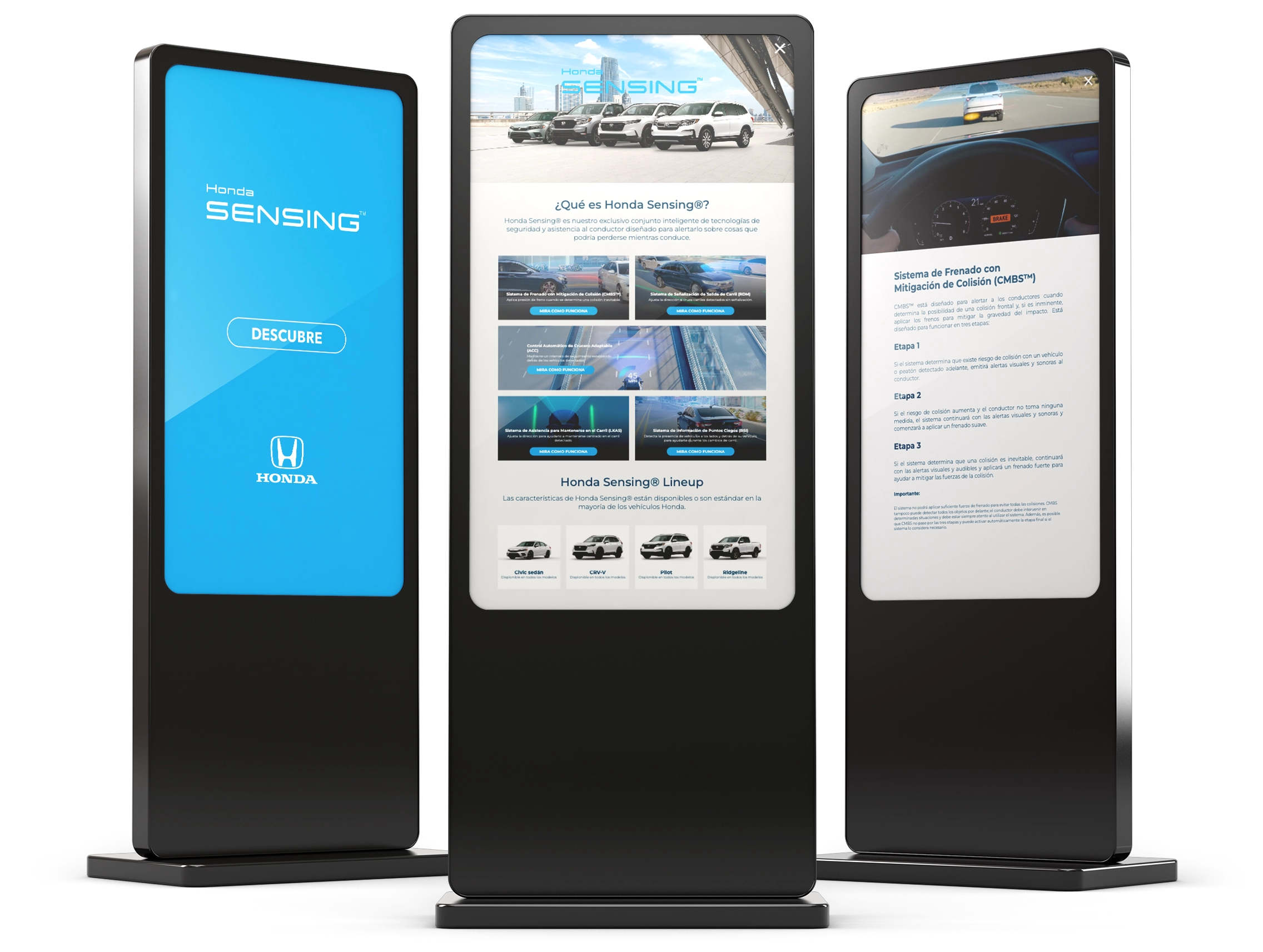
61.3% didn't even know the platform
These weren't casual buyers. In the last 3 months they'd used official dealers (86%), bought genuine Honda parts (88%) and followed maintenance schedules religiously (91%). Dream customers. Completely unaware the platform existed.
They wanted to fix an ugly website
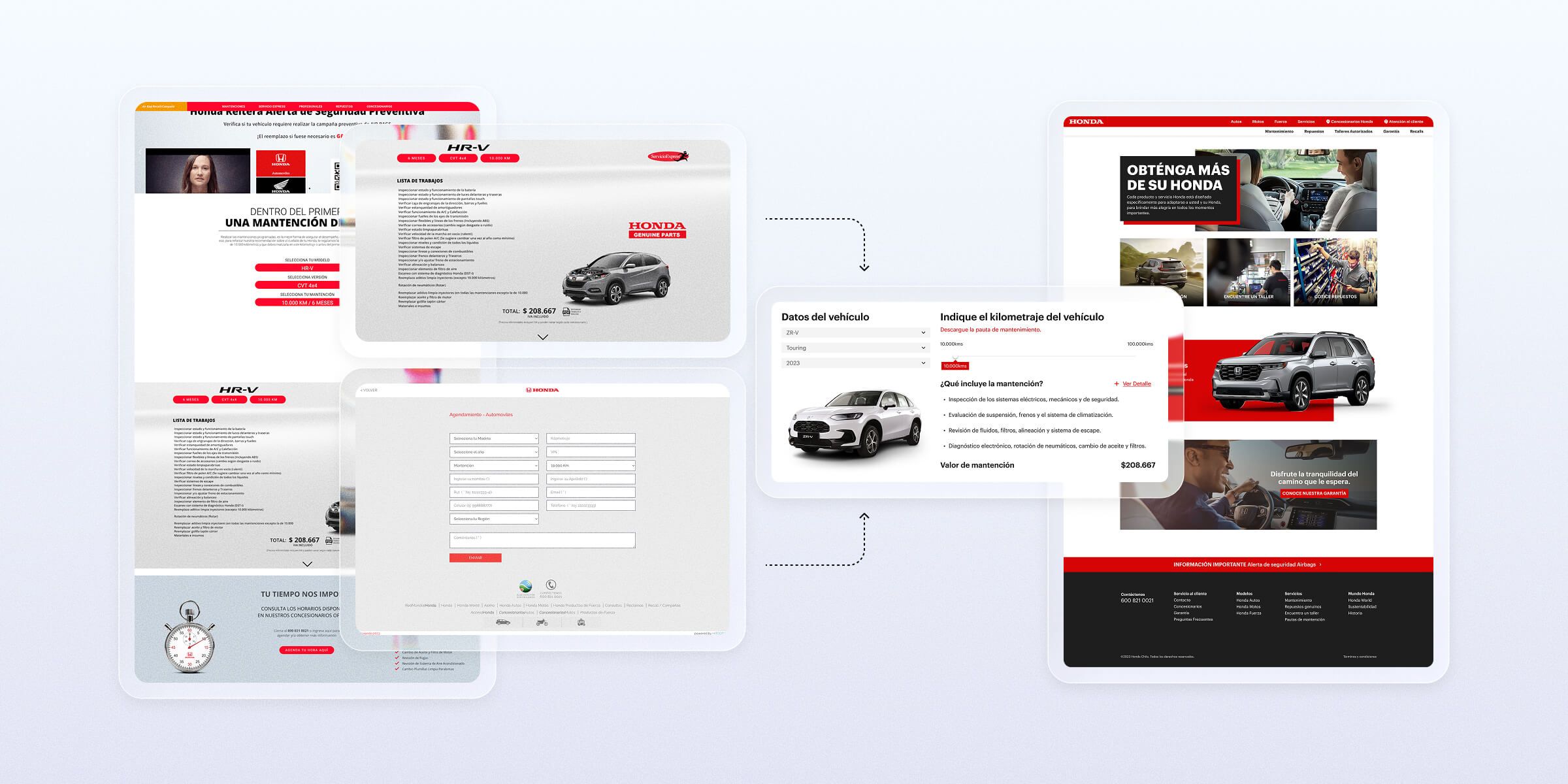
Fair. Confusing navigation on desktop, nonexistent on mobile. Broken backend. Overcomplex forms. Fragmented services across disconnected pages.
But why wasn't anyone using it? Marketing assumed bad UX. Research said: wrong question.
Adaptive flows built into the service experience
I created adaptive flows based on vehicle knowledge. Not everyone knows their VIN or exact trim. Motorcycle owners know their machines, they converted at 2.5x. Women prioritize warranty verification. Men want cost efficiency. How do you talk to all of them?
Prototypes validated at 92.85/100 Inuit Usability Score.
The biggest constraint was the backend. Users booked appointments that dealers never received. So we designed around reality: low-cost integrations, realistic data flows, solutions that worked within operational limits.
Ready for a deep dive?
Research Design
I designed the assessment battery; site audits, competitive benchmarks, FDV matrix. Then validated hypotheses with interviews to build a survey capturing three dimensions:
Behavioral data
Where do you service your vehicle?. What parts do you buy?. How do you schedule maintenance?.
Attitudinal data
Why do you prefer genuine parts?. What service features matter most?. What prevents you from using the platform?.
Demographic overlays
Vehicle type (car/motorcycle/both), gender, age, service frequency.
2000 emails sent. 463 responses. 74.6% completion rate. People actually wanted this fixed.
Surfacing owners behaviors
Gender Signals Different Trust Needs
Women prioritize trust verification over transaction efficiency. Not "women care more about warranty", they need different proof points to engage: Dealer legitimacy matters more than convenience. Warranty verification before price inquiry. Trust signals first, efficiency second.
Motorcycle Owners Are a Different Customer
Motorcycle owners were 2.5x more likely to use the platform. Not just "more engaged" - structurally different: Stronger dealer relationships (service more frequently). Higher brand affinity (motorcycle is lifestyle, not appliance). More comfortable with digital tools for maintenance
The Genuine Parts Paradox
- Customers want genuine parts but can't justify the premium without information
- Price transparency before purchase builds trust to convert later
- Parts quoter isn't just utility - it's trust-building education
From UX Fix to Go-to-Market Strategy
This wasn't a UX project anymore. It was a go-to-market strategy: convert motorcycle owners fast, use them as proof for car owners, build trust features for skeptical segments, fix dealer integration to ensure reliability.
Same platform. Different entry points. Different messaging.
Validation
Scored 92.85/100 on the Inuit Usability Score, a standardized benchmark used to evaluate perceived usability.
What worked:
- Separated flows for different use cases
- Multiple data entry methods based on owner literacy (VIN, model/year, license plate)
- Progressive disclosure (don't ask everything upfront)
- Contextual help (explain why we need VIN)
What needed work:
- Parts quoter still confusing (users knew model/year, not "version")
- Educational content easy to skip when scanning
- Technical language needed simplification
Usability score validated the UX. Segmentation insights validated the strategy.
Honda's marketing team finally gets the bigger picture
Redesigning services was also a low-risk, high-value bet. The main Honda site is focused on catalog, quoting, and selling. The most visible part of the business. We aimed to build a Design System without slowing everything down.
Services reaches a segment of users who are already deep in their ownership journey: people researching maintenance, parts, and official shop networks. It touches actual Honda customers, which made it the ideal place to validate patterns, components, and content structure before scaling the system to the rest of the site.
The proposal gained traction fast because insights opened new marketing strategies. Gender-based trust signals changed messaging approach. Education content became service revenue opportunity. Research was actionable across departments (not just UX).
Then Honda transitioned agencies. The project was shelved.
Good research lasts
Years later, I checked Honda Chile's service site. Simplified navigation, separated dealer/parts flows, organized maintenance information, it's there. The agency handoff took longer than expected, but the research held up. Good research doesn't need its original designer.
Insights were real. Segments were real. Good research gets used eventually.
Learnings
- Cross-reference everything
Real insights came from overlapping datasets: awareness × usage × conversion × priorities × qualitative reasoning. The gender trust insight emerged from mixing ranking data with open-ended answers. The parts paradox came from combining preferences with price sensitivity and trust language. One dimension is a data point. Multiple dimensions create insight. - Research for multiple audiences creates organizational value
Marketing wanted UX fixes. Research delivered customer segmentation, new revenue angles, and dealer engagement strategies. When research answers more than the original question, the whole organization benefits. - AI accelerates pattern recognition
ChatGPT-4 helped cross-check and synthesize 463 responses in minutes. AI didn't replace judgment. It removed bottlenecks so I could validate, compare, and question faster.